
Global mattress buyers are reviewing where and how they source finished mattresses. Cost remains important, but reliable production, clear communication, product flexibility and export preparation now carry equal weight. An experienced mattress manufacturer in Indonesia can give importers and private-label brands another production base while supporting a broader China Plus One sourcing strategy.
Cheaper Than China Mattress connects international buyers with mattress manufacturing in Indonesia for OEM, ODM and private-label programs. The objective is practical: help buyers compare constructions, materials, packaging and target pricing before committing to a production plan. This approach is relevant to distributors, retailers, hospitality suppliers and project buyers serving North America, South America, Africa, Korea, Japan and Europe.
Why Global Buyers Are Evaluating Indonesia
A sourcing decision should reduce commercial risk rather than simply move it from one country to another. Indonesia offers an established manufacturing base, access to raw materials and a workforce familiar with labor-intensive production. For mattress buyers, the country can support spring, foam, hybrid, hotel and roll-packed constructions alongside packaging and private-label requirements.
A China Plus One strategy does not always mean replacing an existing supplier. Many companies begin by qualifying a second production source for selected models, markets or seasonal demand. This creates an alternative when capacity, freight, tariffs or delivery schedules change. It also gives purchasing teams a clearer basis for comparing total landed cost instead of relying only on the factory price.
Import duties and trade rules vary by destination and can change. Buyers should confirm the current tariff classification, origin rules and import requirements with a customs broker before placing an order. A manufacturer should provide accurate product descriptions and shipping documents, but the importer remains responsible for compliance in the destination market.
What to Evaluate in a Mattress Manufacturer
The first factory discussion should cover the product specification in detail. Important points include mattress dimensions, spring system, foam type and density, comfort layers, fabric, quilting pattern, edge support, finished height, fire or labeling requirements, packaging method and target order quantity. A clear specification helps the factory propose a workable construction and prevents price comparisons between products that are not equivalent.
Buyers should also ask how samples, revisions and approvals are managed. A dependable development process records changes to materials, measurements, firmness, appearance and packaging. This is especially important for private-label orders because the approved sample becomes the reference for production. Confirm which features are fixed, which can vary within manufacturing tolerances and which require written approval before substitution.
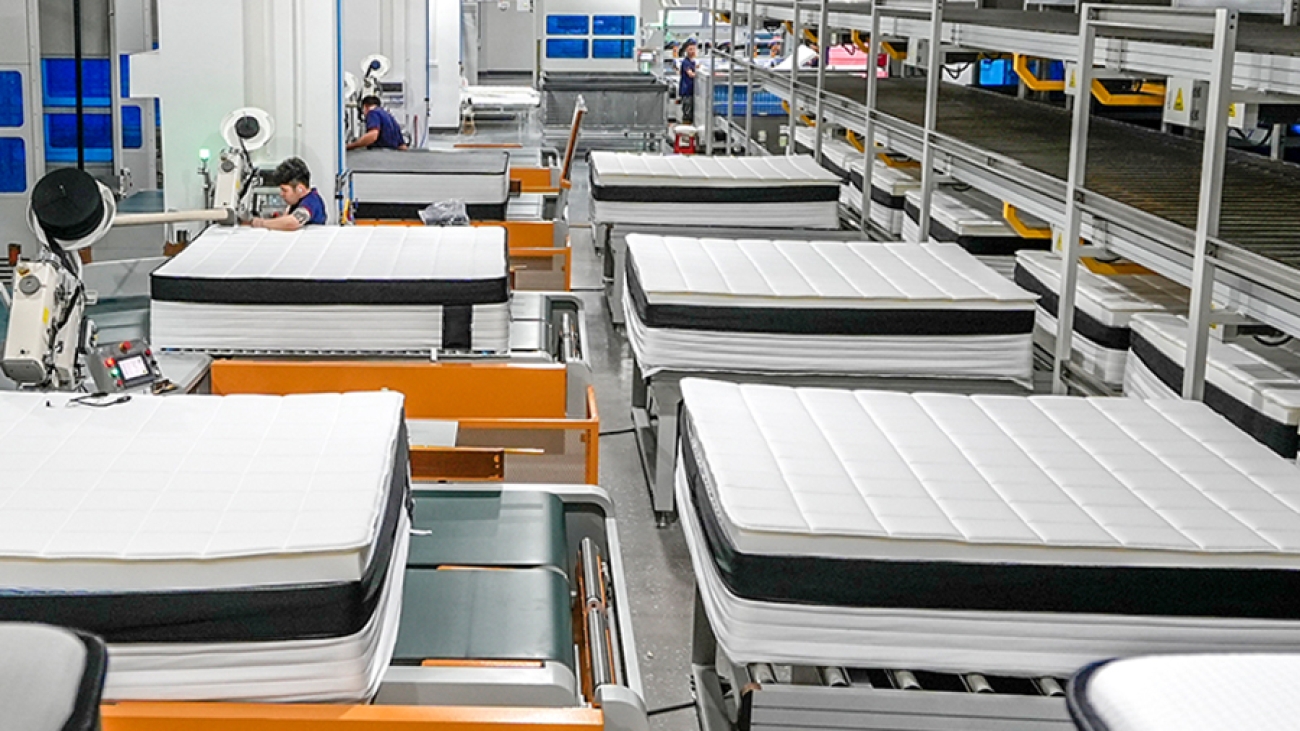
Production visibility matters. Factory images, process explanations and inspection checkpoints help a buyer understand how materials move through quilting, foam preparation, mattress assembly, quality inspection, compression, packing and export preparation. These details do not replace an audit, but they make early supplier qualification more efficient.
Product Options for Different Markets
International markets do not all require the same product. Pocket spring mattresses can support motion isolation and targeted comfort positioning. Bonnell spring models can suit value-focused retail or project programs. Foam and hybrid constructions allow buyers to adjust feel, height and material combinations. Hotel and project mattresses may require a different balance of durability, comfort and budget than consumer retail models.
Roll-packed mattresses are often selected when logistics efficiency is a priority. Compression and rolling can reduce shipping volume, but the construction must be designed and tested for that packaging method. Buyers should confirm recovery expectations, storage guidance and the maximum recommended time in compressed packaging.
The product range should follow the needs of the destination market. Retail price, room type, climate, customer preference, warranty position and local regulations all affect the final specification. A useful manufacturer asks about these conditions before recommending a construction.
OEM and Private Label Development
OEM manufacturing allows a buyer to define the product while the factory manages production. Private-label programs may also include brand labels, care labels, cartons, roll-pack bags and other packaging elements. The process normally begins with a brief covering the target market, product concept, expected order volume and price range.
A factory quotation should identify the main construction, size, material assumptions, packaging and commercial terms. If the quoted specification changes, the price may change as well. Buyers should compare quotations line by line and request clarification whenever two offers use different foam densities, spring counts, fabric weights or packaging methods.
Cheaper Than China Mattress supports early-stage comparison for buyers who want to evaluate an Indonesian manufacturing alternative. Buyers can submit an existing specification, current supplier price or a new product brief to begin the discussion.
Preparing for a Productive Factory Inquiry
A complete inquiry saves time for both sides. Include the destination country, required mattress sizes, preferred construction, firmness or comfort target, fabric direction, packaging method, estimated quantity and requested delivery schedule. If the project is confidential, identify which documents require controlled handling.
It is also useful to state whether the request is for a quotation, sample development, supplier comparison or an active purchase program. The factory can then respond with the appropriate level of detail. Buyers who are still defining the product can begin with a reference model and target retail segment.
Indonesia can be a practical sourcing option for companies seeking an additional mattress production base. The strongest results come from a clear specification, realistic commercial assumptions and direct communication throughout development and production.