
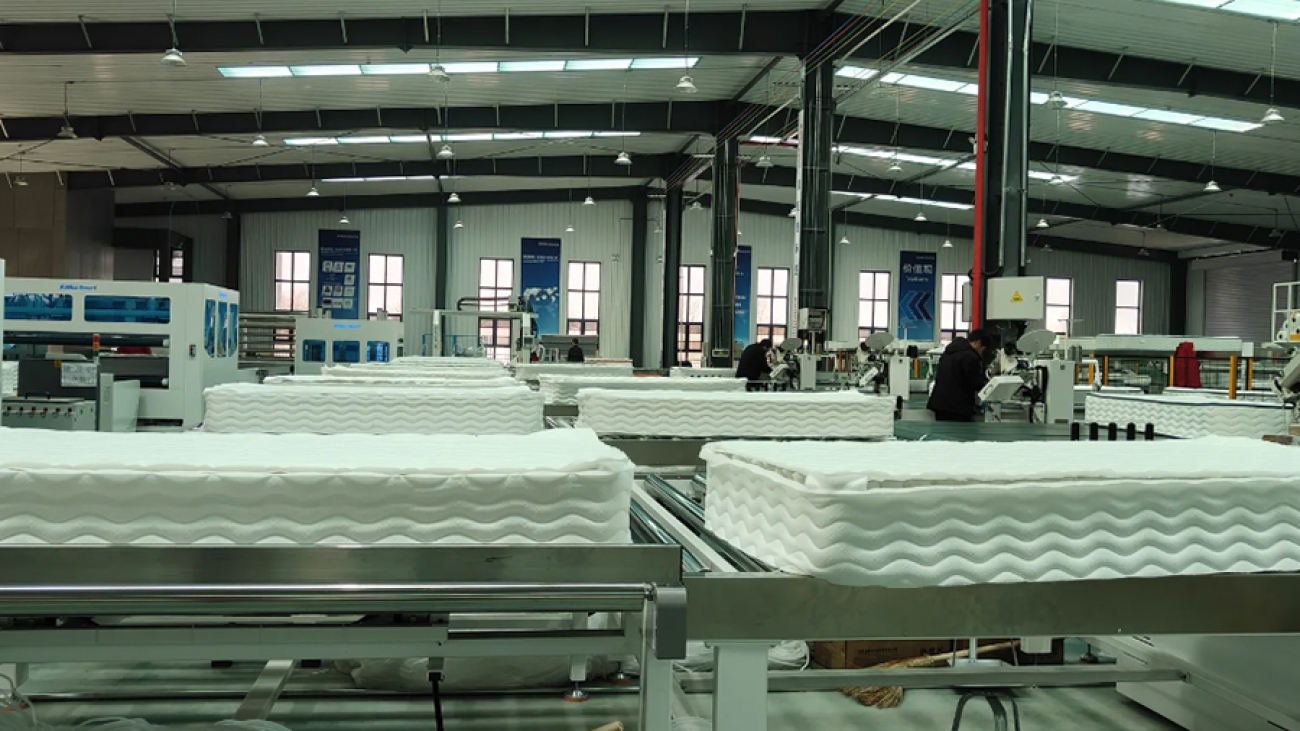
An OEM mattress manufacturer turns a product brief into a repeatable construction that can be produced under the buyer’s brand. The right partner does more than quote a standard model. The factory must understand the target market, price position, comfort direction, material requirements, packaging and order plan before development begins.
Cheaper Than China Mattress works with international importers, distributors, retailers and hospitality buyers that want to develop mattresses in Indonesia. Programs can cover custom sizes, spring or foam constructions, private-label details and packaging for shipment to North America, South America, Africa, Korea, Japan and Europe.
How OEM Mattress Development Works
The process starts with a written product brief. A useful brief identifies the destination market, mattress type, dimensions, finished height, comfort target, key materials, packaging method, expected quantity and target price range. Reference images can help explain the intended appearance, but technical measurements are still required for accurate costing.
The manufacturer reviews the brief and proposes a construction. This may include a pocket spring or Bonnell spring unit, foam layers, quilting materials, border support, fabric and packaging. Each item affects feel, performance, finished height and cost. Buyers should request a specification sheet that records the approved materials and measurements.
Sample development follows the agreed concept. The buyer evaluates the sample for dimensions, comfort, appearance and packaging. Feedback should be specific. Comments such as ‘slightly firmer in the center’ or ‘reduce the finished height by two centimeters’ are more useful than a general request to improve the product. Each approved revision should be documented before mass production.
Private Label Elements That Need Early Approval
Private-label details often take longer than expected because several suppliers may be involved. Woven labels, law labels, printed fabric, embroidery, carton artwork, instruction sheets and roll-pack bags all require artwork and production approval. Brand colors should use defined color references rather than visual descriptions alone.
Packaging must also match the logistics plan. A mattress may be flat packed, compressed, folded or roll packed depending on its construction and the buyer’s distribution model. Carton dimensions, barcode placement, shipping marks and pallet configuration should be confirmed before the final production schedule is approved.
Destination-market labeling and fire-safety rules vary. Buyers should provide the required legal text, testing standard and responsible-party information. The factory can apply approved labels, but the buyer should confirm compliance with qualified local advisers or laboratories.
Choosing the Right Mattress Construction
Pocket spring mattresses use individually wrapped coils and are commonly selected for differentiated comfort and reduced motion transfer. Bonnell spring mattresses use an interconnected coil system that can support value-focused ranges and volume programs. Foam mattresses allow flexible layer combinations, while hybrid mattresses combine springs and foam for a broader comfort proposition.
The best construction depends on the intended customer and retail position. A hotel project may prioritize repeatable firmness and durability. A boxed mattress program may prioritize recovery after compression and efficient parcel dimensions. A premium retail line may require more complex comfort layers and a distinctive cover design.
An OEM mattress manufacturer should explain how each design choice affects cost and production. Buyers can then decide which features create customer value and which add complexity without improving the market proposition.
Commercial Details to Confirm Before Ordering
A quotation should state the model, sizes, materials, packaging, quantity basis, payment terms and delivery basis. Confirm whether sample charges, printing plates, labels, testing, pallets or special cartons are included. Freight estimates should be treated separately unless the quotation clearly states the shipping scope and validity period.
Minimum order quantities depend on the construction, material availability, packaging and production plan. Rather than assuming a fixed MOQ for every model, provide the expected mix of sizes and ask the factory to propose an efficient order structure. Consolidating fabrics or components across several models can sometimes simplify purchasing and production.
Lead time should be confirmed after sample approval, artwork approval and deposit requirements are complete. Production schedules can change with material availability and seasonal demand, so buyers should build a reasonable buffer into launch plans.
Building a Repeatable Private Label Program
Long-term programs depend on controlled specifications. Keep the latest approved construction sheet, sample reference, artwork files, packaging instructions and inspection criteria in one record. When a revision is accepted, update the version number and effective date so that the factory and buyer work from the same information.
Agree on the checks required before shipment. These may include dimensions, visual workmanship, label placement, packaging condition and quantity. More technical performance checks should follow the applicable product standard and an agreed testing method.
A structured development process helps both sides move faster. It reduces repeated questions, prevents silent specification changes and gives the buyer a clearer view of what will be produced under the brand.